
Many risks in hazardous waste management stem from inconsistent execution of routine procedures. Clear, standardized hazardous waste labels help organizations improve classification, storage, and transportation while supporting safer and more compliant operations.
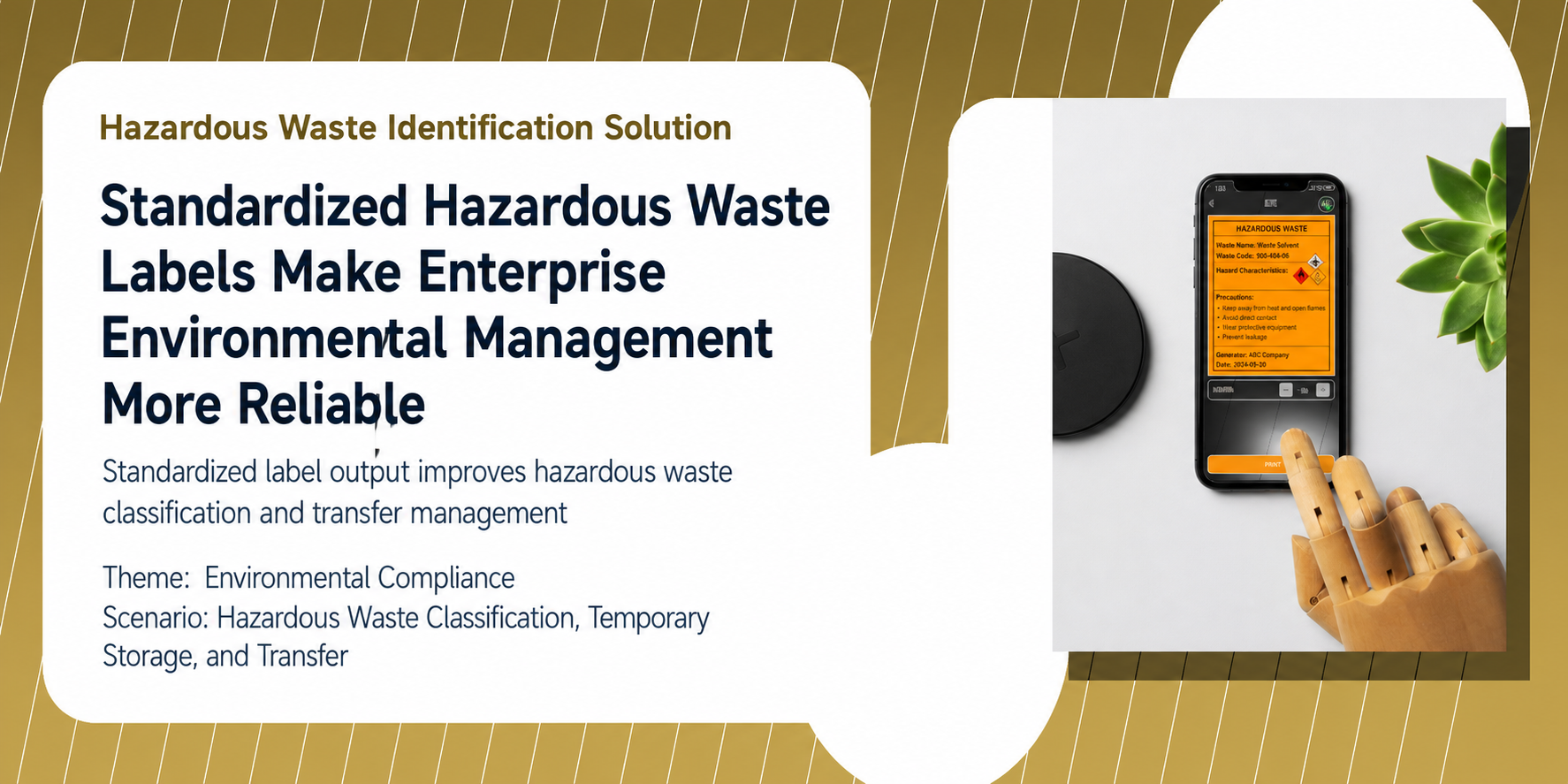
Hazardous waste management demands strict control and accountability. Even small issues, such as unclear or inconsistent labeling, can increase operational risks. Although labels may seem like a minor detail, they play a critical role in ensuring accurate waste classification and efficient handling throughout the entire management process.
Standardized hazardous waste labels provide clear information about the waste source, category, identification date, and management status. This allows on-site personnel to identify materials quickly, follow established procedures more accurately, and maintain consistency during inspections, handovers, and traceability activities.
For manufacturers, laboratories, healthcare facilities, and environmental service providers, hazardous waste labels are far more than a regulatory formality. They are a practical management tool that supports daily operations, improves communication, and helps ensure that compliance requirements are carried out consistently.
Strengthening hazardous waste labeling does not add unnecessary complexity—it is a cost-effective way to improve environmental compliance, workplace safety, and operational efficiency. A well-designed labeling system is often the first step toward building a more reliable and standardized hazardous waste management process.